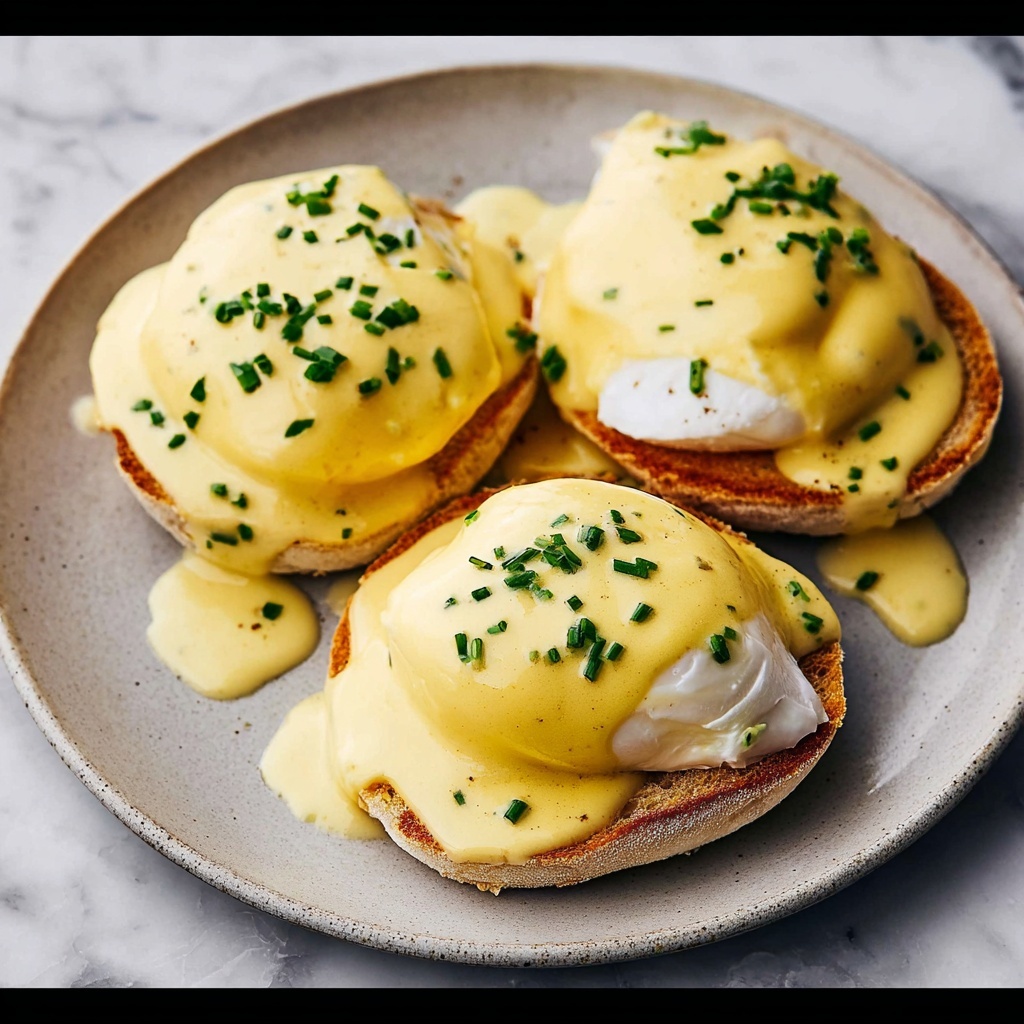
If you have ever wanted to master a classic brunch favorite, this Eggs Benedict Recipe is your golden ticket. With perfectly toasted English muffins, crispy Canadian bacon, silky poached eggs, and a luscious homemade hollandaise sauce, every bite is a delightful blend of creamy, savory, and tangy flavors. It’s impressive enough to serve for a special occasion yet simple enough to become your weekend tradition. Trust me, once you try this Eggs Benedict Recipe, your brunch game will never be the same!
Ingredients You’ll Need
The beauty of this Eggs Benedict Recipe lies in its simple but essential ingredients. Each component plays a key role in creating the dish’s signature balance — from the tender English muffins providing a sturdy base to the rich hollandaise sauce tying everything together with a buttery, lemony kick.
- 4 tbsp unsalted butter (for spreading): Adds rich flavor and helps toast the English muffins perfectly.
- 4 English muffins (halved): The foundation of the dish, offering crunch and texture support.
- 8 slices Canadian bacon: Brings a smoky, salty element that complements the creamy eggs.
- 8 large eggs: The star ingredient, poached to silky perfection.
- 1 tbsp white vinegar: Helps the eggs coagulate quickly during poaching, keeping them tender.
- 4 tbsp unsalted butter (½ stick): Essential for making a smooth, rich hollandaise sauce.
- 1 tbsp lemon juice (from ½ lemon): Brightens the hollandaise with refreshing acidity.
- 1 tsp Dijon mustard: Adds subtle complexity and a gentle tang to the hollandaise.
- 4 egg yolks: Used to create the creamy base of the hollandaise sauce.
- Salt and pepper (to taste): Enhances all the layers of flavor throughout the dish.
- Chopped fresh chives (optional): Adds a pop of color and fresh onion flavor as garnish.
- Ground paprika (optional): Provides an inviting color contrast and mild spice on top.
How to Make Eggs Benedict Recipe
Step 1: Prepare the Base
Start by buttering the English muffin halves generously and place them cut side up on a baking sheet. Adding a little butter not only enhances the flavor but also helps to get an irresistibly golden, crispy surface once toasted.
Step 2: Add the Canadian Bacon
Arrange the slices of Canadian bacon alongside the muffin halves on the same baking sheet. The goal is to crisp the edges slightly while keeping the meat juicy, striking that perfect balance of texture and taste.
Step 3: Broil to Perfection
Pop the baking sheet under a hot broiler for about 3 to 4 minutes. Keep a close eye to avoid burning — the muffins should turn beautifully toasted and the bacon nicely crisped on the edges for that satisfying bite.
Step 4: Bring Water to a Boil
While the base is toasting, fill a large saucepan with water and bring it to a rolling boil. This step sets the stage for perfectly poached eggs, so patience here is key.
Step 5: Prepare the Eggs
Carefully crack each egg into individual small bowls or ramekins. This little trick makes it easier to slide them gently into the water, avoiding breaks or mixing of yolks and whites.
Step 6: Simmer the Water
Reduce the heat to maintain just a very gentle simmer — tiny bubbles should only appear at the bottom of the pan. A calm water surface helps the eggs hold their shape during poaching.
Step 7: Add Vinegar
Stir in 1 tablespoon of white vinegar. This might seem small, but it works wonders in helping the egg whites coagulate quickly and tightly around the yolks for that classic poached appearance.
Step 8: Poach the Eggs
Bring the ramekins close to the surface of the simmering water and carefully slide the eggs in, two to four at a time. Cover the saucepan and let the eggs cook for about 4 minutes, which yields tender whites with perfectly runny yolks.
Step 9: Drain the Eggs
Use a slotted spoon to gently lift the eggs out and place them on a paper towel-lined plate. This helps remove any excess water so your Eggs Benedict won’t turn soggy.
Step 10: Make the Hollandaise Sauce
In a heatproof bowl or small saucepan, whisk together the egg yolks, lemon juice, and Dijon mustard. Slowly melt 4 tablespoons of butter and drizzle it in gradually while whisking vigorously until the sauce thickens into a smooth, creamy emulsion. Season with salt and pepper to your liking.
Step 11: Assemble the Eggs Benedict
Stack each toasted English muffin half with a slice of Canadian bacon, a poached egg, and then generously spoon the warm hollandaise sauce over the top. That glossy, velvety finish is what makes this Eggs Benedict Recipe a standout.
Step 12: Garnish and Serve
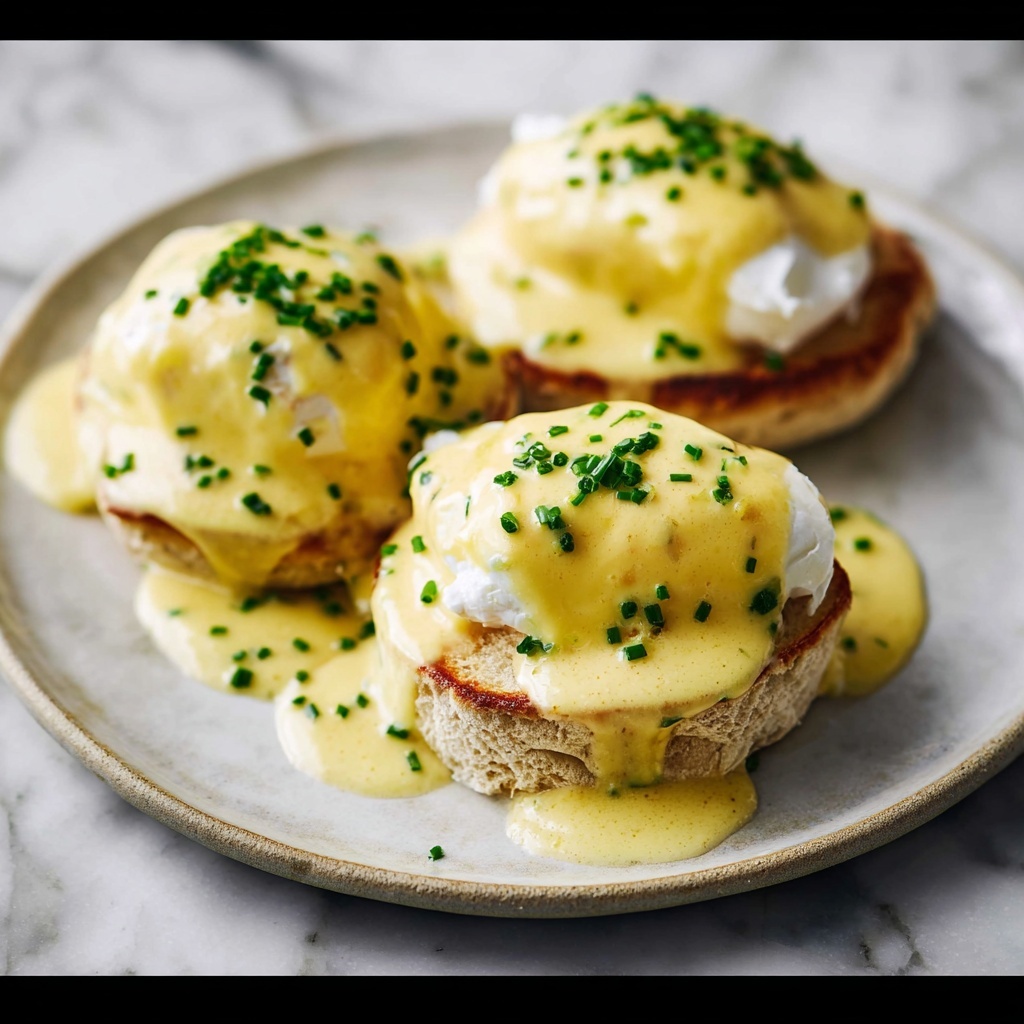
Sprinkle with fresh chopped chives and a pinch of ground paprika if you like, adding color and a hint of brightness to the dish. Now it’s ready to wow your brunch guests or simply delight yourself!
How to Serve Eggs Benedict Recipe

Garnishes
Fresh chopped chives offer a mild, oniony crunch that pairs beautifully with the creamy hollandaise, while a dash of smoked paprika not only brightens the visual appeal but also adds a subtle smoky warmth. These simple touches elevate the dish from classic to elegant with ease.
Side Dishes
Eggs Benedict pairs delightfully with light and fresh sides such as mixed greens dressed with lemon vinaigrette or roasted asparagus. For a heartier brunch, crispy breakfast potatoes or a fresh fruit salad bring complementary textures and flavors that round out the meal perfectly.
Creative Ways to Present
Feeling adventurous? Try swapping Canadian bacon for smoked salmon or sautéed spinach to make Eggs Florentine or a seafood variation. You can also use brioche or sourdough bread instead of English muffins to add additional layers of texture and flavor. Presentation-wise, stacking multiple layers or serving on elegant plates with microgreens adds a touch of flair guaranteed to impress.
Make Ahead and Storage
Storing Leftovers
Keep any leftover components separate in airtight containers—the English muffins and bacon at room temperature for a short while, and the poached eggs and hollandaise in the fridge for up to 24 hours. Storing separately helps preserve the best textures and flavors.
Freezing
While poached eggs and hollandaise do not freeze well due to texture changes, you can freeze extra cooked Canadian bacon and toasted English muffins. Just reheat thoroughly when ready to serve, and poach fresh eggs for each meal for optimal taste.
Reheating
Gently reheat the Canadian bacon and toasted muffins in a warm oven to restore their crispness. For the hollandaise, use a double boiler method over low heat to warm it slowly without curdling. It’s best to poach fresh eggs or warm leftovers briefly as overheating can make them tough.
FAQs
Can I make hollandaise sauce ahead of time?
Yes, you can make hollandaise in advance and gently reheat it over a double boiler just before serving. Avoid microwave heating as it can separate the sauce. Keep it covered and warm for up to a few hours if needed.
What if I don’t have Canadian bacon?
No worries! You can substitute with regular bacon, ham, or smoked salmon for a delicious twist. Each alternative brings a slightly different flavor, so feel free to experiment with your favorites.
How can I tell if an egg is perfectly poached?
A perfectly poached egg will have firm whites that hold the shape but a yolk that’s still runny inside. When gently pressed, the yolk should feel soft but not liquid on the surface—this is the magic of classic Eggs Benedict.
Is there a shortcut for hollandaise sauce?
Traditional hollandaise does take a bit of attention, but for a quick fix, you can use a blender-based recipe or buy high-quality hollandaise sauce from stores. However, making it homemade adds a fresh buttery richness that’s hard to beat.
What if I don’t have a broiler?
Simply toast your English muffins in a toaster or oven on a high heat and cook the Canadian bacon in a pan until crispy. The broiler is great for quick finishing but not essential to a delicious Eggs Benedict Recipe.
Final Thoughts
Eggs Benedict is more than just a brunch dish — it’s a celebration of textures and flavors harmonizing in every bite. This Eggs Benedict Recipe is a fantastic way to elevate your weekend mornings or impress friends with a timeless classic. With a little practice and these detailed steps, you’ll be creating restaurant-quality dishes from your own kitchen that everyone will love. So go ahead, gather your ingredients, and dive into this deliciously rewarding culinary adventure!
Print
Eggs Benedict Recipe
- Prep Time: 10 minutes
- Cook Time: 20 minutes
- Total Time: 30 minutes
- Yield: 4 servings
- Category: Breakfast
- Method: Broiling (for muffins and bacon), Poaching (for eggs), Stovetop (for hollandaise sauce)
- Cuisine: American
Description
Classic Eggs Benedict is a luxurious brunch dish featuring perfectly toasted English muffins topped with crispy Canadian bacon, delicately poached eggs, and a rich, creamy homemade hollandaise sauce. This recipe guides you through each step ensuring a perfectly balanced and elegant dish.
Ingredients
For the Muffins and Bacon
- 4 tbsp unsalted butter (for spreading, ½ stick)
- 4 English muffins (halved)
- 8 slices Canadian bacon
For the Poached Eggs
- 8 large eggs
- 1 tbsp white vinegar
For the Hollandaise Sauce
- 4 tbsp unsalted butter (½ stick)
- 4 egg yolks
- 1 tbsp lemon juice (from ½ lemon)
- 1 tsp Dijon mustard
- Salt and pepper (to taste)
Optional Garnishes
- Chopped fresh chives
- Ground paprika
Instructions
- Prepare the English Muffins and Canadian Bacon: Butter the English muffin halves lightly and arrange them on a baking sheet with the cut side facing up. Add the Canadian bacon slices to the same baking sheet, distributing them evenly.
- Broil the Muffins and Bacon: Place the baking sheet under the broiler for 3-4 minutes, keeping a close eye to avoid burning. Remove when the muffins are golden and toasted and the Canadian bacon edges are crisp.
- Boil Water for Poaching: Fill a large saucepan with water and bring it to a rolling boil over high heat.
- Prepare the Eggs for Poaching: Crack each egg carefully into small individual bowls or ramekins to ensure no shells and ease of transfer.
- Simmer Water with Vinegar: Reduce the heat so water is just simmering with a few gentle bubbles, then add 1 tablespoon of white vinegar to help the eggs coagulate.
- Poach the Eggs: Gently slide 2-4 eggs at a time into the simmering water close to the surface, cover the pan, and poach for about 4 minutes, or until whites are set but yolks remain runny.
- Remove and Drain Eggs: Use a slotted spoon to lift the poached eggs out, placing them on a paper towel-lined plate to absorb excess water.
- Prepare Hollandaise Sauce: In a heatproof bowl or double boiler, melt 4 tablespoons of unsalted butter. In a separate bowl, whisk together 4 egg yolks, lemon juice, and Dijon mustard. Slowly drizzle the melted butter into the yolks while whisking vigorously until thick and creamy. Season with salt and pepper to taste.
- Assemble the Eggs Benedict: On each toasted English muffin half, place a slice of Canadian bacon, top with a poached egg, and generously spoon hollandaise sauce over the top.
- Garnish and Serve: Sprinkle each serving lightly with chopped fresh chives and a pinch of ground paprika if desired. Serve immediately for best flavor and texture.
Notes
- Using fresh eggs improves poaching results as older eggs tend to spread out in the water.
- Adding vinegar to the poaching water helps the egg whites firm quickly, preventing mushy edges.
- Be sure to keep the water at a gentle simmer; boiling water will break apart the eggs.
- To keep poached eggs warm while finishing the sauce, you may gently cover them with foil.
- Hollandaise sauce is best served immediately but can be kept warm over a double boiler on very low heat for a short time.
- For a lighter version, consider using turkey bacon and substituting some butter with olive oil in the sauce.