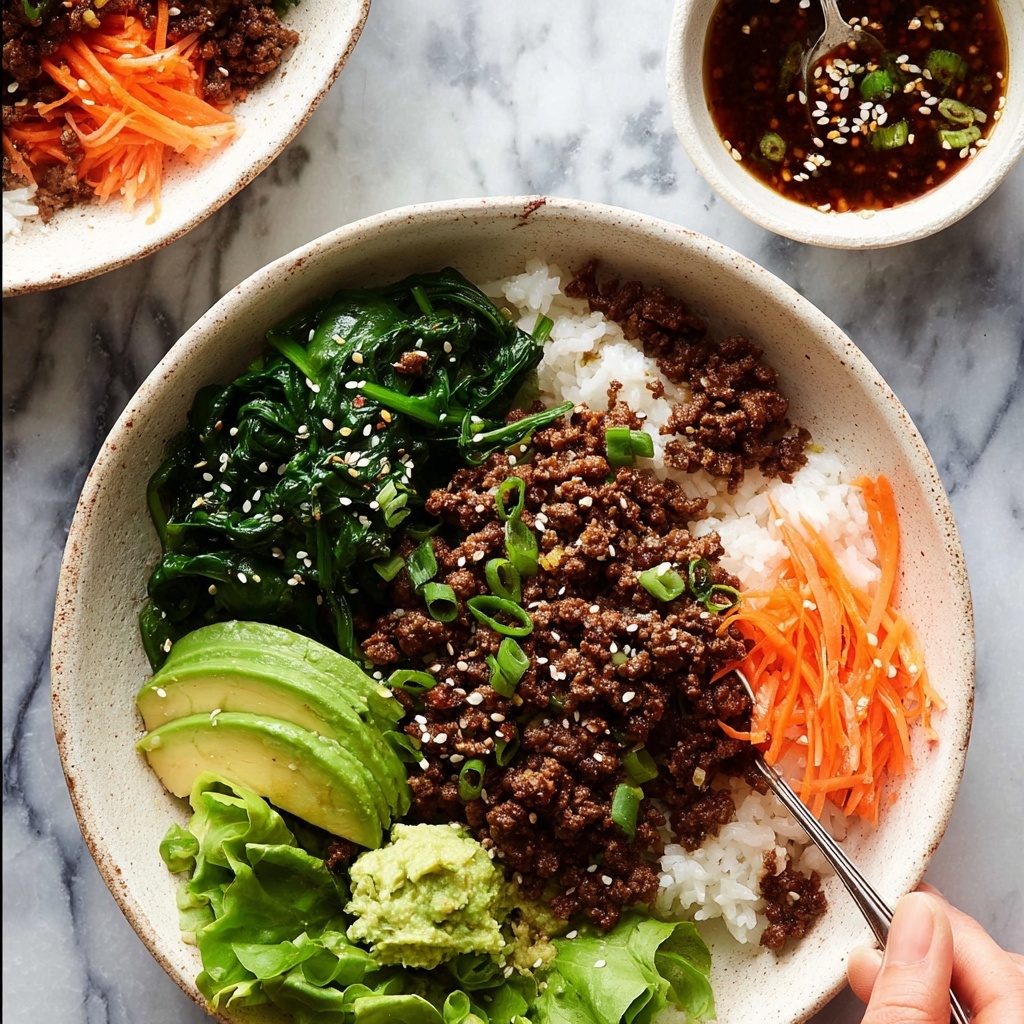
If you’re craving a dish that’s bursting with flavor yet surprisingly simple to prepare, you’ll love this Korean Beef Bulgogi Rice Bowls Recipe. It’s a perfect harmony of sweet, savory, and fresh, combining tender caramelized beef with crisp veggies and creamy avocado over a bed of fluffy rice. This recipe brings a little slice of Korean comfort food to your table, making weeknight dinners exciting and utterly satisfying.
Ingredients You’ll Need
The beauty of this Korean Beef Bulgogi Rice Bowls Recipe lies in its straightforward ingredients, each carefully chosen to build layers of flavor and texture. Every item, from the fragrant sesame oil to the fresh ginger and pickled ginger, plays a crucial role without overwhelming the dish.
- 500g / 1 lb beef mince: Ground beef is the star, and choosing your preferred fat content helps control richness.
- 1 tbsp canola oil: A neutral oil perfect for cooking the beef and wilting spinach without overpowering flavors.
- 1 tbsp onion, finely grated: Adds natural sweetness and moisture to the beef mixture for depth.
- 3 tbsp red apple, finely grated: This subtle sweetness balances the savory notes beautifully—don’t skip the skin!
- 3 garlic cloves, finely grated: Essential for that aromatic punch and classic Korean flavor profile.
- 1 tsp ginger, finely grated: Fresh ginger adds warmth and a gentle spicy kick.
- 2 1/2 tbsp soy sauce (all-purpose or light): Brings salty umami that is fundamental to bulgogi.
- 1 tbsp sesame oil: Infuses nutty flavor and fragrance characteristic of Korean dishes.
- 1 tbsp mirin: A sweet rice wine that rounds out the marinade—feel free to omit if you prefer no alcohol.
- 1 tbsp brown sugar: Adds sweetness necessary for caramelization and balance.
- 1/8 tsp black pepper: Just a touch to enhance all the flavors.
- 2 tbsp soy sauce (for drizzle sauce): Continues the savory theme in the finishing drizzle.
- 1 tbsp sesame oil (for drizzle sauce): Keeps the drizzle rich and aromatic.
- 2 tsp brown sugar (for drizzle sauce): Sweetness that ties the drizzle together perfectly.
- 2 tsp rice vinegar: Adds a mild tang that brightens the entire bowl.
- White rice (medium or short grain): The perfect fluffy canvas for all the flavorful toppings.
- 4 large handfuls baby spinach: Adds vibrant green color and a tender, slightly earthy bite.
- 1 large carrot, peeled and julienned or grated: Crunchy sweetness that complements the rich beef.
- 1 avocado, mashed: Creaminess that cools and contrasts the boldness of the bulgogi.
- 1/4 cup pickled ginger: Bright pink color and a sharp zing cleanse the palate.
- 1 1/2 cups baby cos / romaine lettuce, torn: Fresh, crisp leafy greens for added texture.
- 1 tsp white sesame seeds: Tiny bursts of nuttiness and visual appeal.
- 1 green onion, finely sliced: Adds freshness and a mild bite as a finishing touch.
How to Make Korean Beef Bulgogi Rice Bowls Recipe
Step 1: Prepare the Sauces
Start by mixing two separate sauces: the bulgogi marinade that will coat the beef, and a lighter drizzle sauce for finishing the bowls. This step ensures your beef will be rich and flavorful while your drizzle adds a tangy balance.
Step 2: Wilt the Spinach
Heat 2 teaspoons of canola oil in a large non-stick pan over high heat. Toss half the baby spinach into the hot pan and stir quickly until just semi-wilted. Then add the remaining spinach and cook until fully wilted but still vibrant and fresh. Removing it promptly keeps the greens bright and tender, making them the perfect bed for the beef.
Step 3: Cook the Bulgogi Beef
Add a tablespoon of canola oil to the same pan and crank the heat back up. Add the ground beef, breaking it apart as it cooks. Once no raw pink remains, pour over your pre-mixed bulgogi sauce. Let this simmer rapidly, stirring intermittently, until the sauce reduces and thickens. This is when the magic happens: keep stirring so the meat caramelizes beautifully while staying moist with that irresistible sauce clinging to every morsel.
Step 4: Assemble the Rice Bowls
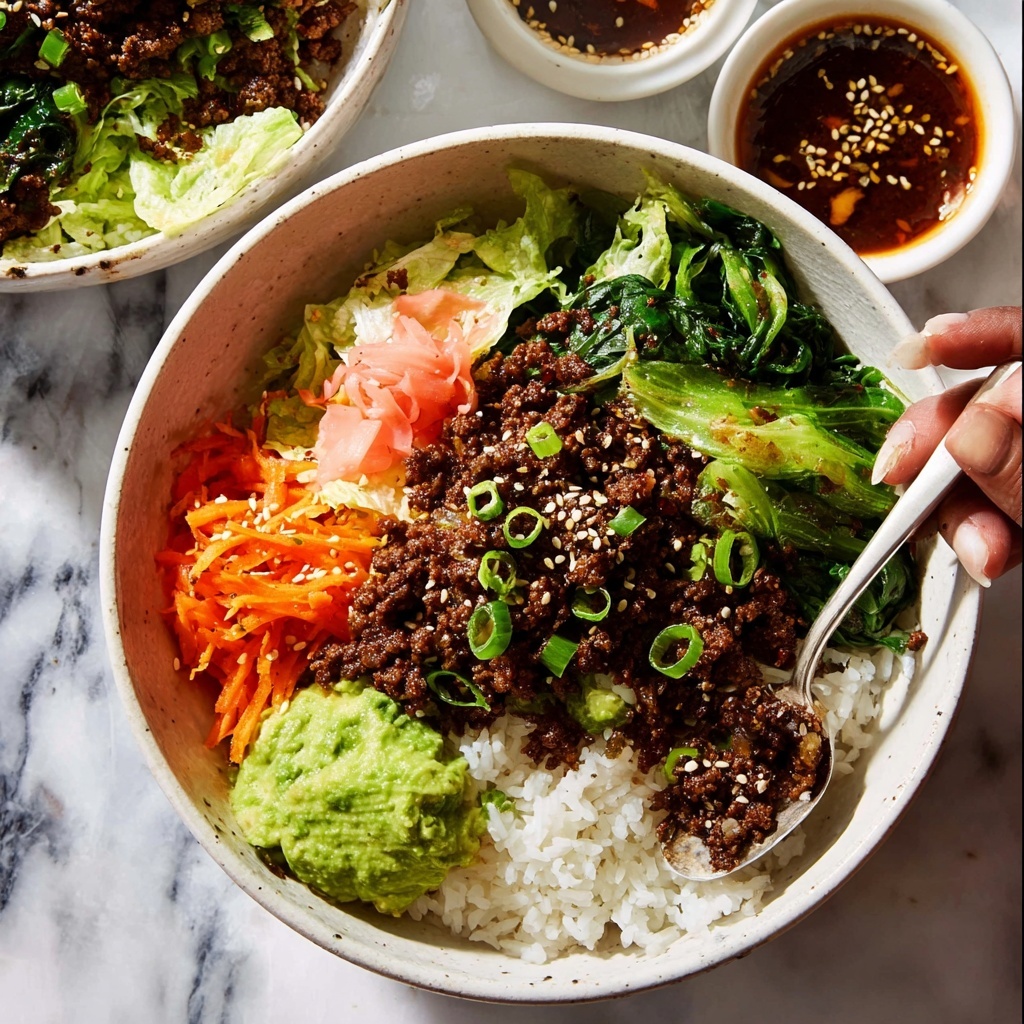
Now for the fun part—layering all the components. Spoon a generous portion of the flavorful beef over fluffy white rice. Arrange the wilted spinach and shredded carrot alongside, then dollop on creamy mashed avocado. Nestle torn romaine lettuce leaves on the side, sprinkle white sesame seeds and sliced green onion over the top, and tuck pickled ginger around. Finally, drizzle the tangy sauce over everything just before diving in. It’s a bowl bursting with color, textures, and bold flavors that beckon you to mix it all up and enjoy!
How to Serve Korean Beef Bulgogi Rice Bowls Recipe
Garnishes
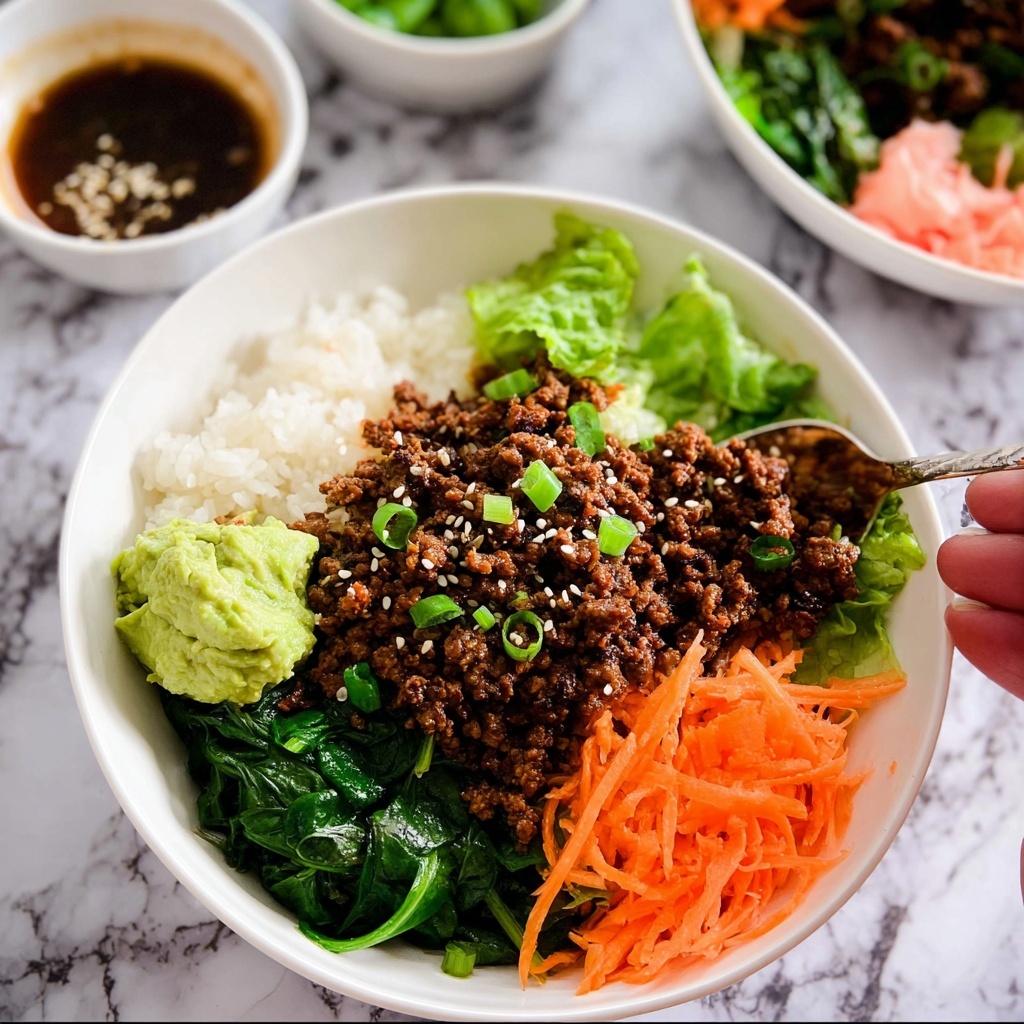
Garnishing this dish is where you can have some fun. Freshly sliced green onions and a sprinkle of toasted white sesame seeds add that final aromatic crunch. The vivid pink pickled ginger brings a lovely pop of color and cleanses the palate between bites, while the creamy avocado plays a cooling role, balancing the sweet and savory notes of the bulgogi beef.
Side Dishes
Though this Korean Beef Bulgogi Rice Bowls Recipe stands beautifully on its own, pairing it with simple sides can elevate the meal. Consider a light cucumber kimchi or a fresh seaweed salad to bring refreshing contrast. Steamed edamame or miso soup create a rounded, comforting spread that echoes Korean flavors seamlessly.
Creative Ways to Present
If you want to switch things up, try serving this bulgogi beef on warm lettuce cups instead of rice for a low-carb, fun hand-held option. Alternatively, layer it in a large bowl as a bibimbap-style dish, letting everyone mix their own portions, garnishes, and drizzle sauce. The vibrant colors and textures make it a feast for both the eyes and palate.
Make Ahead and Storage
Storing Leftovers
Leftover bulgogi beef and veggies store wonderfully in airtight containers in the refrigerator for up to three days. Keeping the rice and garnishes separate helps maintain freshness and texture when ready to eat again.
Freezing
For longer storage, freezing the cooked bulgogi beef without the fresh ingredients like avocado or greens works best. Portion it into freezer-safe containers or bags and freeze for up to two months. Thaw overnight in the refrigerator before reheating.
Reheating
Reheat your bulgogi beef gently in a skillet over medium heat, adding a splash of water if needed to loosen the sauce. Avoid microwave reheating of delicate ingredients like avocado; instead, add those fresh components after warming the main parts to preserve flavor and texture.
FAQs
Can I use a different cut of beef for this recipe?
Absolutely! While this Korean Beef Bulgogi Rice Bowls Recipe calls for ground beef for ease and quick cooking, thinly sliced ribeye or sirloin can be used if you prefer a more traditional bulgogi texture.
Is mirin essential in the bulgogi sauce?
Mirin adds a subtle sweetness and depth, but if you’d rather avoid alcohol, you can omit it and simply balance the sauce with a bit more brown sugar or apple juice.
What can I substitute for baby spinach?
Feel free to swap baby spinach with other tender leafy greens like kale, napa cabbage, or even bok choy. Just wilt them similarly in the pan to get the right texture.
Can this recipe be made vegetarian?
Yes! You can substitute the ground beef for plant-based crumbles or marinated tofu. Adjust cooking times accordingly and enjoy a vegetarian take on the Korean Beef Bulgogi Rice Bowls Recipe.
How spicy is this dish?
This version of the Korean Beef Bulgogi Rice Bowls Recipe isn’t spicy on its own, but you can easily add chili flakes or a dash of gochujang to the bulgogi sauce if you like some heat.
Final Thoughts
There’s something incredibly comforting and exciting about making this Korean Beef Bulgogi Rice Bowls Recipe at home — it’s like having a little authentic Korean feast in just one bowl. The balance of sweet, savory, crispy, and creamy will win over anyone who tries it, and best of all, it’s quick enough for a weeknight meal. So why not grab these simple ingredients and bring a burst of flavor and color to your dinner table tonight?
Print
Korean Beef Bulgogi Rice Bowls Recipe
- Prep Time: 15 minutes
- Cook Time: 10 minutes
- Total Time: 25 minutes
- Yield: 4 to 5 servings
- Category: Main Course
- Method: Stovetop
- Cuisine: Korean
Description
This Korean Beef Bulgogi Rice Bowl recipe offers a quick and easy way to enjoy the rich, savory flavors of traditional bulgogi with ground beef, paired beautifully with fresh vegetables, pickled ginger, and a flavorful sauce. Perfect for a fast weeknight dinner, it combines caramelized marinated beef with tender spinach, crisp carrots, creamy avocado, and rice, drizzled with a tangy sauce to bring it all together.
Ingredients
Beef and Marinade
- 500g / 1 lb beef mince (ground beef), any fat percentage
- 1 tbsp canola oil (or any other plain flavoured oil)
- 1 tbsp onion, finely grated (~1/4 onion)
- 3 tbsp red apple, finely grated (skin on is fine, ~1/2 apple)
- 3 garlic cloves, finely grated
- 1 tsp ginger, finely grated
- 2 1/2 tbsp soy sauce (all-purpose or light)
- 1 tbsp sesame oil
- 1 tbsp mirin (optional, omit for no alcohol)
- 1 tbsp brown sugar
- 1/8 tsp black pepper
Rice Bowl Drizzle Sauce
- 2 tbsp soy sauce (all-purpose or light)
- 1 tbsp sesame oil
- 2 tsp brown sugar
- 2 tsp rice vinegar (or apple cider vinegar)
Vegetables and Garnishes
- 4 large handfuls baby spinach (or similar chopped leafy greens like cabbage or kale)
- 1 large carrot, peeled and julienned or grated
- 1 avocado, mashed
- 1/4 cup pickled ginger (preferably pink for color)
- 1 1/2 cups baby cos / romaine lettuce, torn into bite-size pieces
- 1 tsp white sesame seeds
- 1 green onion, finely sliced
Additional
- White rice (medium or short grain), cooked
- 2 tsp canola oil (for wilting spinach)
Instructions
- Prepare Sauces: In a small bowl, mix together the Bulgogi sauce ingredients: grated onion, grated apple, garlic, ginger, soy sauce, sesame oil, mirin, brown sugar, and black pepper. In a separate bowl, combine the rice bowl drizzle sauce ingredients: soy sauce, sesame oil, brown sugar, and rice vinegar. Set both sauces aside.
- Wilt Spinach: Heat 2 teaspoons of canola oil in a large non-stick pan over high heat. Add half of the baby spinach and toss with tongs until it’s semi-wilted, about 30 seconds. Add the remaining spinach and continue tossing until fully wilted, approximately 1 minute. Remove the spinach from the pan and place it in a bowl.
- Cook Bulgogi Beef: Add 1 tablespoon of oil to the same pan and keep the heat on high. Add the ground beef and cook, breaking it up with a spatula, until there is no visible raw meat. Pour in the prepared Bulgogi sauce and let it simmer rapidly, stirring occasionally, until most of the sauce has evaporated. Continue cooking and stirring regularly until the beef caramelizes and develops some browning while remaining moist from the sauce.
- Assemble Bowls: Spoon cooked white rice into serving bowls. Top each with the Bulgogi beef, wilted spinach, and julienned carrot. Add a dollop of mashed avocado and a spoonful of pickled ginger. Arrange torn baby cos or romaine lettuce down the side. Sprinkle white sesame seeds and sliced green onions over the top. Serve accompanied by the drizzle sauce to pour over just before eating, then mix everything together to enjoy.
Notes
- Note 1: The grated onion and apple help tenderize and sweeten the beef, adding authentic bulgogi flavor.
- Note 2: Use all-purpose or light soy sauce to control saltiness and color of the dish.
- Note 3: Mirin adds a subtle sweetness and depth; omit if avoiding alcohol.
- For best results, use medium or short grain white rice for a sticky texture that complements the beef.
- Adjust sweetness and salt levels in sauces according to your taste preference.
- Ground beef fat content can be adjusted based on preference; 80/20 is common for balanced flavor and juiciness.