
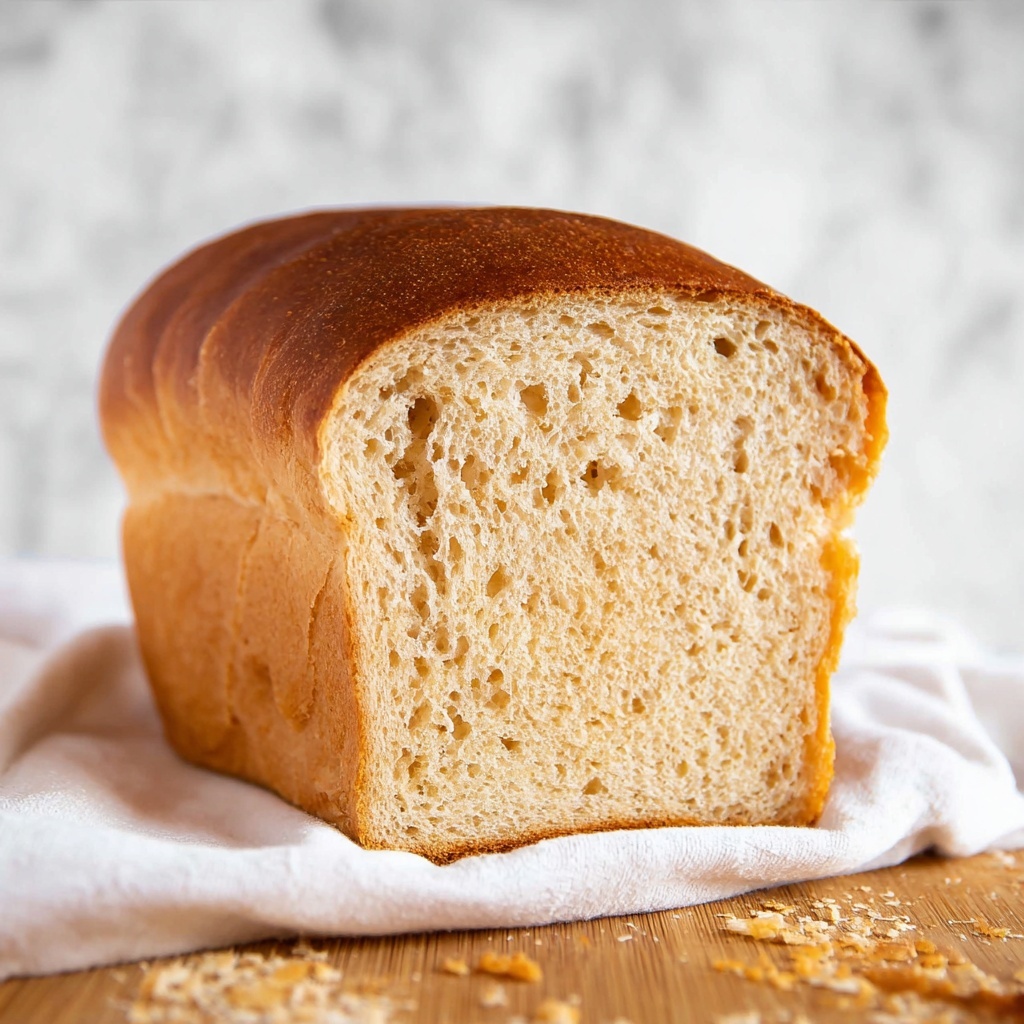
If you have ever dreamed of baking your own bread at home that is crusty, chewy, and packed with flavor, then this Easy Sourdough Bread Recipe is exactly what you need. This recipe brings you the magic of traditional sourdough with surprisingly simple ingredients and a straightforward process that anyone can follow. Whether you are a beginner or a home baking enthusiast, you’ll love how this bread fills your kitchen with the warm, tangy aroma of freshly baked goodness that is both rustic and comforting.
Ingredients You’ll Need
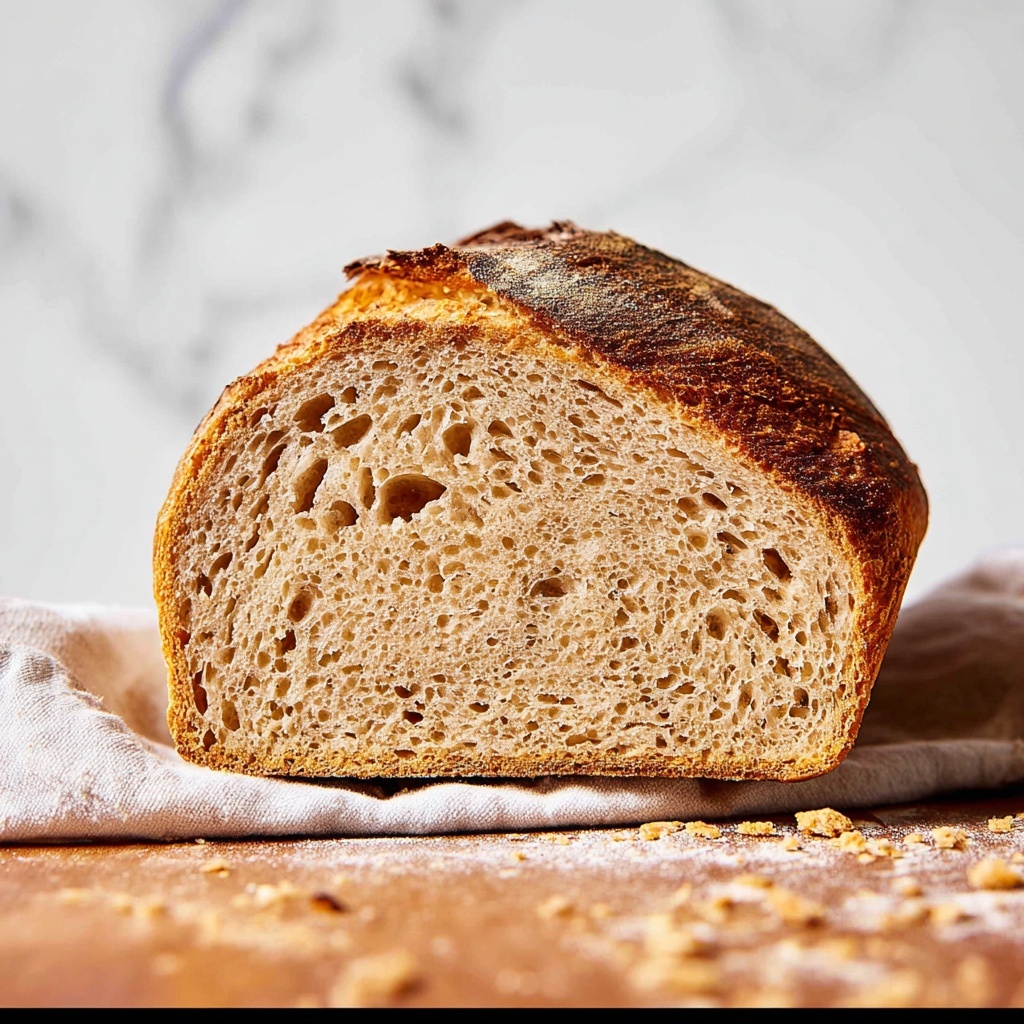
Don’t let the ingredient list scare you—each component in this Easy Sourdough Bread Recipe plays an essential role in turning basic pantry staples into a loaf you’ll want to savor with every bite. The quality of your flour, the hydration of your starter, and even the olive oil you choose all contribute to the flavor, texture, and crust color of your finished bread.
- 75% hydration sourdough starter (½ cup): This is your natural leavening agent, packed with wild yeast and bacteria that give the bread its signature sour flavor and airy crumb.
- All-purpose flour (1 ⅔ cups + 6 ¼ cups): The backbone of your dough, providing structure and that perfect chewiness in every slice.
- Water (⅔ cup + 2 cups hand-warm): Hydrates the flour, activating the gluten and creating a moist, tender crumb inside a crunchy crust.
- Fed starter (1 ½ cups): A refreshed sourdough starter that boosts fermentation and helps your loaf rise beautifully.
- Salt (1 tablespoon): Enhances flavor and controls yeast activity for a balanced taste.
- Olive oil (¼ cup): Adds a tender crumb and a subtle richness, plus it contributes to a lovely golden crust.
How to Make Easy Sourdough Bread Recipe
Step 1: Preparing the Dough
Begin by mixing your 75% hydration sourdough starter with the ⅔ cup of water and 1 ⅔ cups of all-purpose flour. This initial combination helps activate your starter and sets the stage for gluten development. Stir until everything is just combined, then let it rest for about 30 minutes to an hour. This rest is called autolyse, which allows the flour to fully hydrate and results in a more extensible dough.
Step 2: Mixing the Main Dough
After the autolyse, add 1 ½ cups of fed starter, 2 cups of hand-warm water, 6 ¼ cups of all-purpose flour, 1 tablespoon of salt, and ¼ cup of olive oil to the bowl. Mix the ingredients together until a sticky dough forms. The process may seem messy, but that’s the beauty of sourdough baking — the dough’s hydration helps create a light crumb and crust with a lovely aroma.
Step 3: Bulk Fermentation and Stretch & Fold
Place the dough in a large, lightly oiled bowl, cover it with a damp cloth or plastic wrap, and let it ferment at room temperature for about 4 to 6 hours. During this time, perform a series of stretch and folds every 30 minutes for the first 2 hours. Stretch and fold helps strengthen gluten strands without the need for heavy kneading, meaning your dough gets structure while maintaining its softness.
Step 4: Shaping, Proofing, and Baking
Once the bulk fermentation is complete and the dough has roughly doubled in size, turn the dough out onto a floured surface. Gently shape it into your desired loaf form — boule or batard work beautifully here. Place the shaped dough into a proofing basket or bowl lined with a floured kitchen towel and allow it to proof for another 2 hours, or until it springs back slowly when poked. Preheat your oven to 450°F (230°C) with a Dutch oven or baking stone inside. Carefully transfer the dough into the preheated vessel, score the top with a sharp knife to allow it to expand during baking, and bake covered for 25 minutes. Then remove the lid and bake for another 15 minutes until golden brown and crusty.
How to Serve Easy Sourdough Bread Recipe
Garnishes
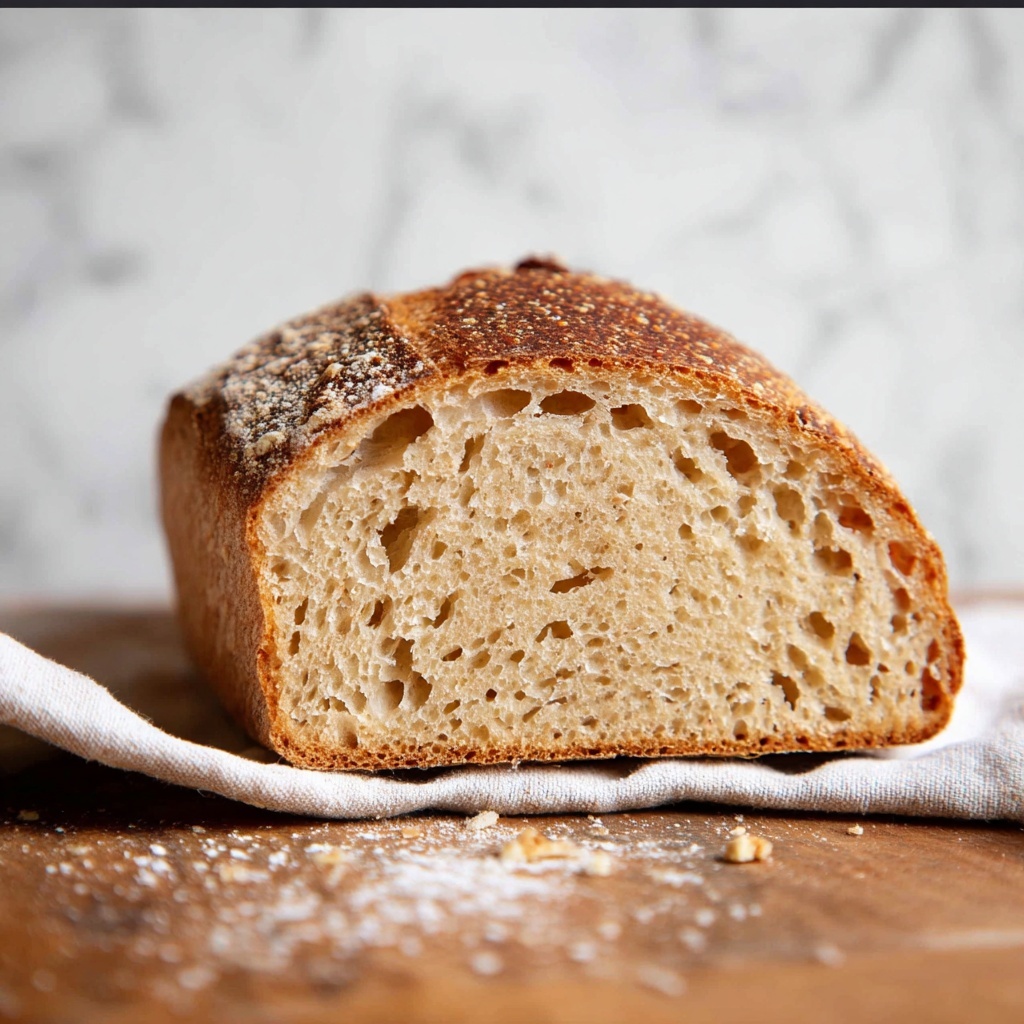
A classic crumb and crust combination lets this sourdough shine on its own, but for an extra touch, sprinkle flaky sea salt or brush lightly with garlic-infused olive oil right after baking. Fresh herbs like rosemary or thyme can be pressed gently on top before baking for a lovely aromatic crust garnish.
Side Dishes
This Easy Sourdough Bread Recipe pairs beautifully with almost anything. Whether it’s a bowl of your favorite soup, a vibrant salad, or a cheese platter loaded with brie, gouda, and olives, this bread is the perfect vehicle for soaking up flavors and making every bite more memorable.
Creative Ways to Present
Slice the bread thick for hearty sandwiches stacked with roasted veggies and creamy spreads, or toast thin slices topped with smashed avocado and a sprinkle of chili flakes for an effortless, delicious snack. You can also turn it into bruschetta by topping with diced tomatoes and fresh basil drizzled with balsamic glaze.
Make Ahead and Storage
Storing Leftovers
After your loaf has cooled completely, store it in a paper bag or loosely wrapped in a kitchen towel at room temperature to maintain that crispy crust. Avoid plastic bags for short-term storage to prevent the crust from becoming soggy.
Freezing
If you want to keep your Easy Sourdough Bread Recipe on hand for later, slice the loaf before freezing and store the slices in an airtight freezer bag. This way, you can pull out only the slices you need without thawing the whole loaf.
Reheating
To revive that fresh-baked texture, reheat slices in a toaster or an oven set at 350°F (175°C) for about 5 to 10 minutes. This step crisps up the crust again and warms the bread through, making it taste just like the moment it came out of your oven.
FAQs
What is a sourdough starter and how do I maintain it?
A sourdough starter is a natural culture of wild yeast and beneficial bacteria that helps your bread rise and develop flavor. To maintain it, feed your starter regularly with equal parts flour and water, discard some of the starter before feeding, and keep it at room temperature or refrigerated depending on your baking frequency.
Can I use whole wheat flour instead of all-purpose flour in this recipe?
Yes, you can substitute up to half of the all-purpose flour with whole wheat flour for a nuttier flavor and more nutrients, but keep in mind this may make the dough denser and require slightly more hydration.
How long does it take to make this Easy Sourdough Bread Recipe?
While the active prep takes about 30 minutes, the entire process including bulk fermentation, proofing, and baking takes several hours — typically around 6 to 8 hours total. Most of this time is hands-off, allowing the dough to develop flavor and rise naturally.
What if my dough doesn’t rise properly?
If your dough is slow to rise or doesn’t double in size, factors like starter activity, room temperature, and flour quality may be at play. Try feeding your starter a day or two ahead and keep your dough in a warm, draft-free spot to encourage fermentation.
Can I make this Easy Sourdough Bread Recipe gluten-free?
Traditional sourdough depends on gluten for structure, so gluten-free versions require specific gluten-free flours and different techniques. This recipe is designed for all-purpose wheat flour and will not produce the same results if gluten is removed.
Final Thoughts
Baking your own bread with this Easy Sourdough Bread Recipe is such a rewarding experience that will quickly become a beloved kitchen ritual. The aroma that fills your home, the crunchy crust, and that perfect tangy crumb make every bite a joy. I encourage you to give this recipe a try—once you do, fresh sourdough bread from your own oven will feel like an everyday luxury that nourishes both body and soul.
Print
Easy Sourdough Bread Recipe
- Prep Time: 30 minutes
- Cook Time: 30 minutes
- Total Time: 6 hours 30 minutes
- Yield: 25 slices
- Category: Bread
- Method: Baking
- Cuisine: French
Description
This Easy Sourdough Bread recipe yields a crusty, tangy loaf made with a 75% hydration sourdough starter. It includes a straightforward mixing, proofing, and baking process suitable for beginner bakers eager to enjoy homemade artisan bread with minimal fuss.
Ingredients
Starter
- ½ cup 75% hydration sourdough starter
- 1 ⅔ cups all-purpose flour
- ⅔ cup water
Dough
- 1 ½ cups fed starter
- 2 cups hand-warm water
- 6 ¼ cups all-purpose flour
- 1 tablespoon salt
- ¼ cup olive oil
Instructions
- Prepare the Starter: In a mixing bowl, combine ½ cup of your 75% hydration sourdough starter with 1 ⅔ cups all-purpose flour and ⅔ cup water. Stir well until fully mixed to create the levain. Cover the bowl and let the starter ferment at room temperature for 4 to 6 hours until bubbly and active.
- Mix the Dough: In a large bowl, add 1 ½ cups of the fed starter, 2 cups of hand-warm water, and 6 ¼ cups all-purpose flour. Stir the mixture until all flour is hydrated and a shaggy dough forms. Add 1 tablespoon salt and ¼ cup olive oil, mixing thoroughly to incorporate.
- Bulk Fermentation and Folding: Cover the bowl with a damp cloth or plastic wrap and let the dough rise at room temperature for 3 to 4 hours. Every 30 minutes during the first 2 hours, perform gentle stretch and folds to develop gluten. This involves lifting the dough from the edges and folding it over the center to build strength in the dough.
- Shape and Bake: After bulk fermentation, turn the dough out onto a floured surface and shape it into one or two loaves. Place the loaves into floured proofing baskets or bowls for the final rise, covered, for 2 hours or until nearly doubled. Meanwhile, preheat your oven to 450°F (230°C) with a baking stone or heavy baking sheet inside. Once ready, score the top of the dough to allow expansion and transfer to the preheated surface. Bake for about 30 minutes until the crust is golden and crisp. Let cool completely on a wire rack before slicing.
Notes
- The 75% hydration starter means the starter is made with 75% water relative to flour. You can adjust hydration slightly based on flour type or climate.
- Fed starter refers to a starter that has been recently refreshed and is active and bubbly.
- Using a baking stone and preheating the oven ensure a better crust development.
- Allowing the bread to cool completely before slicing helps maintain crumb structure and prevents gumminess.