Description
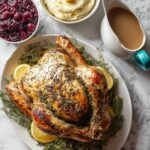
This easy roast turkey recipe delivers a juicy, flavorful bird with a beautifully crispy skin, perfect for holiday gatherings or special dinners. Aromatic herbs and garlic butter infuse the turkey with rich flavor, while simple roasting techniques ensure a tender and moist outcome.
Ingredients
Scale
Turkey
- 1 (14-16 pound) whole turkey (thawed if frozen)
- Salt & pepper (to taste)
- 1 lemon (halved)
- A few sprigs each fresh sage, thyme, and rosemary
- 1 head garlic (broken into cloves and peeled)
Herb Butter
- 1 cup unsalted butter (2 sticks), softened
- 1 tablespoon fresh sage, chopped finely
- 1 tablespoon fresh thyme, chopped finely
- 1 tablespoon fresh rosemary, chopped finely
- 4 cloves garlic, minced
- 1 teaspoon salt
- 1/2 teaspoon pepper (or to taste)
Instructions
- Prepare Turkey and Butter: Remove the turkey from the refrigerator and let it come to room temperature for about one hour. Also, allow the butter to soften. Set the turkey on a baking sheet to catch any drips when opening packaging.
- Make Herb Butter: In a bowl, combine softened butter with chopped sage, thyme, rosemary, minced garlic, salt, and pepper. Mash together thoroughly with a fork until well blended.
- Preheat Oven and Adjust Rack: Preheat your oven to 450°F (232°C). Position the oven rack on the bottom third of the oven and remove any other racks to create ample space for the turkey.
- Prepare Turkey for Roasting: Remove turkey from packaging. Extract giblets and neck from the cavity; do this over a sink if the turkey was frozen as excess liquid will drain. Pat the turkey dry using paper towels and season generously with salt and pepper inside and out.
- Stuff and Butter Turkey: Stuff the cavity with halved lemon, fresh herb sprigs, and peeled garlic cloves. Rub the entire exterior of the turkey (except the bottom) with the herb butter, using your hands to cover all surfaces. Tuck the wings under the body and tie legs together with kitchen twine for a neat presentation, if desired.
- Setup for Roasting: Place the turkey breast-side up on the rack inside a roasting pan.
- Begin Roasting: Insert the roasting pan into the oven and immediately reduce the temperature to 350°F (177°C).
- Roast Until Done: Roast the turkey for approximately 3 hours (13 minutes per pound for a 14-pound bird). Start checking the temperature about 30 minutes before the expected finish time by inserting an instant-read thermometer into the thickest part of the thigh; it should register 165°F (74°C). When the skin browns significantly (often up to an hour early), loosely tent the turkey with foil to prevent the breast from burning and continue roasting until fully cooked.
- Rest and Carve: Once done, carefully tip the roasting rack to let juices drain into the pan for gravy. Transfer the turkey onto a large cutting board or platter and allow it to rest for 20 minutes. This resting period redistributes juices, making the meat moist and tender. Use the drippings to prepare gravy if desired.
Notes
- Letting the turkey come to room temperature before roasting ensures even cooking.
- Using fresh herbs in the butter adds vibrant and robust flavors to the meat.
- Do not baste the turkey during cooking to ensure crisp skin.
- Tenting the turkey with foil once skin is deeply browned prevents over-browning and drying out.
- Resting the turkey for 20 minutes after roasting is crucial for juicy slices.
- Adjust roasting time based on bird weight: approximately 13 minutes per pound at 350°F.
- Removing giblets from the cavity before cooking helps with even heat distribution and prevents unpleasant odors.