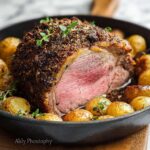
Description
This classic Prime Rib recipe yields a tender, juicy roast perfect for special occasions and holiday meals. The beef is seasoned with a fragrant blend of fresh herbs, garlic, and sea salt, then roasted at high heat to develop a flavorful crust before slow roasting to your preferred doneness. Resting the meat ensures succulent slices every time.
Ingredients
Scale
Prime Rib Roast
- 5 pounds beef prime rib
Seasoning
- Sea salt, to taste
- 2 teaspoons freshly ground black pepper
- 2 teaspoons fresh rosemary, chopped
- 1 teaspoon fresh thyme, chopped
- 8 cloves garlic, minced
- 1/4 cup olive oil
Instructions
- Bring the Meat to Room Temperature: Remove the prime rib from the refrigerator and let it sit at room temperature for one hour. This ensures even cooking throughout the roast.
- Preheat the Oven: Set your oven to 500°F (260°C) and position the rack in the center to allow proper heat circulation for roasting.
- Prepare the Seasoning Mixture: In a mixing bowl, combine sea salt, freshly ground black pepper, chopped rosemary, chopped thyme, minced garlic, and olive oil to create a fragrant herb rub.
- Season the Roast: Pat the prime rib dry with paper towels to remove moisture. Generously rub the seasoning mixture evenly all over the surface of the roast for maximum flavor.
- Initial High-Heat Roasting: Place the seasoned prime rib in a roasting pan and cook at 500°F for 15 minutes. This high temperature sears the outside, creating a flavorful crust.
- Reduce Temperature and Continue Roasting: Lower the oven temperature to 325°F (163°C) and roast the meat for approximately 10 to 15 minutes per pound, depending on desired doneness. Use a meat thermometer to monitor internal temperature.
- Rest the Roast: Remove the prime rib when its internal temperature is 5-10 degrees below your target doneness. Tent it loosely with foil and let it rest for 30 minutes so juices redistribute, resulting in a tender, juicy roast.
- Carve and Serve: Slice the rested prime rib against the grain and serve immediately for an impressive, flavorful centerpiece.
Notes
- Allowing the meat to come to room temperature prevents undercooking in the center and overcooking on the edges.
- Use a reliable meat thermometer to achieve your desired doneness: 120-125°F for rare, 130-135°F for medium-rare, 140-145°F for medium.
- Resting the meat is crucial; skipping this step will cause the juices to run out when carving.
- Adjust herb quantities based on preference; dried herbs can be substituted if fresh are unavailable but use half the amount.
- For perfect crust, do not cover the roast during the high-temperature initial sear.