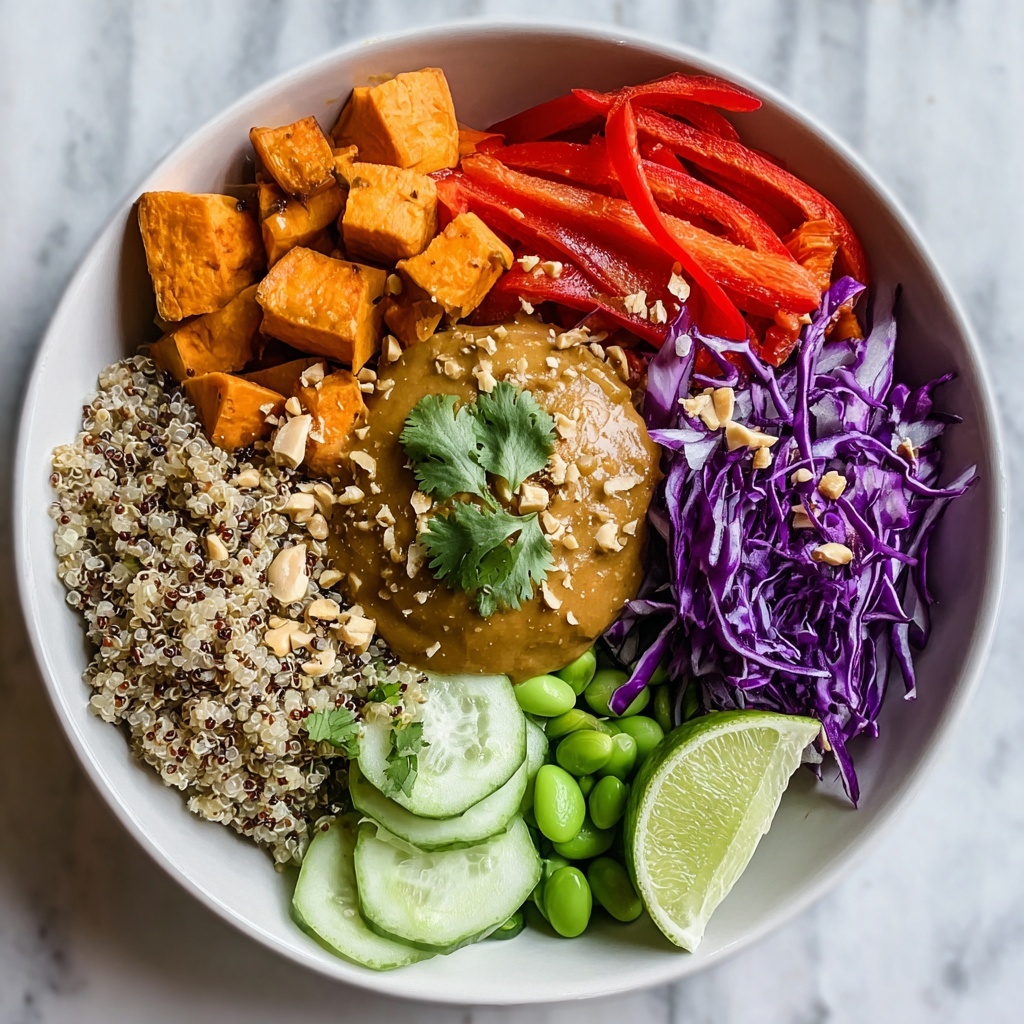
If you’re craving a bowl that’s bursting with vibrant flavors and wholesome goodness, let me introduce you to the Thai Peanut Sweet Potato Buddha Bowl Recipe. This dish is a delightful harmony of tender roasted sweet potatoes, fluffy quinoa, crisp vegetables, and a luscious homemade Thai peanut sauce that ties everything together with a creamy, slightly sweet, and tangy kick. It’s the kind of meal that feels nourishing and indulgent all at once, perfect for lunch or dinner when you want something colorful, satisfying, and packed with nutrition. Trust me, once you master this bowl, it’ll become your go-to comfort food that’s both healthy and delicious.
Ingredients You’ll Need
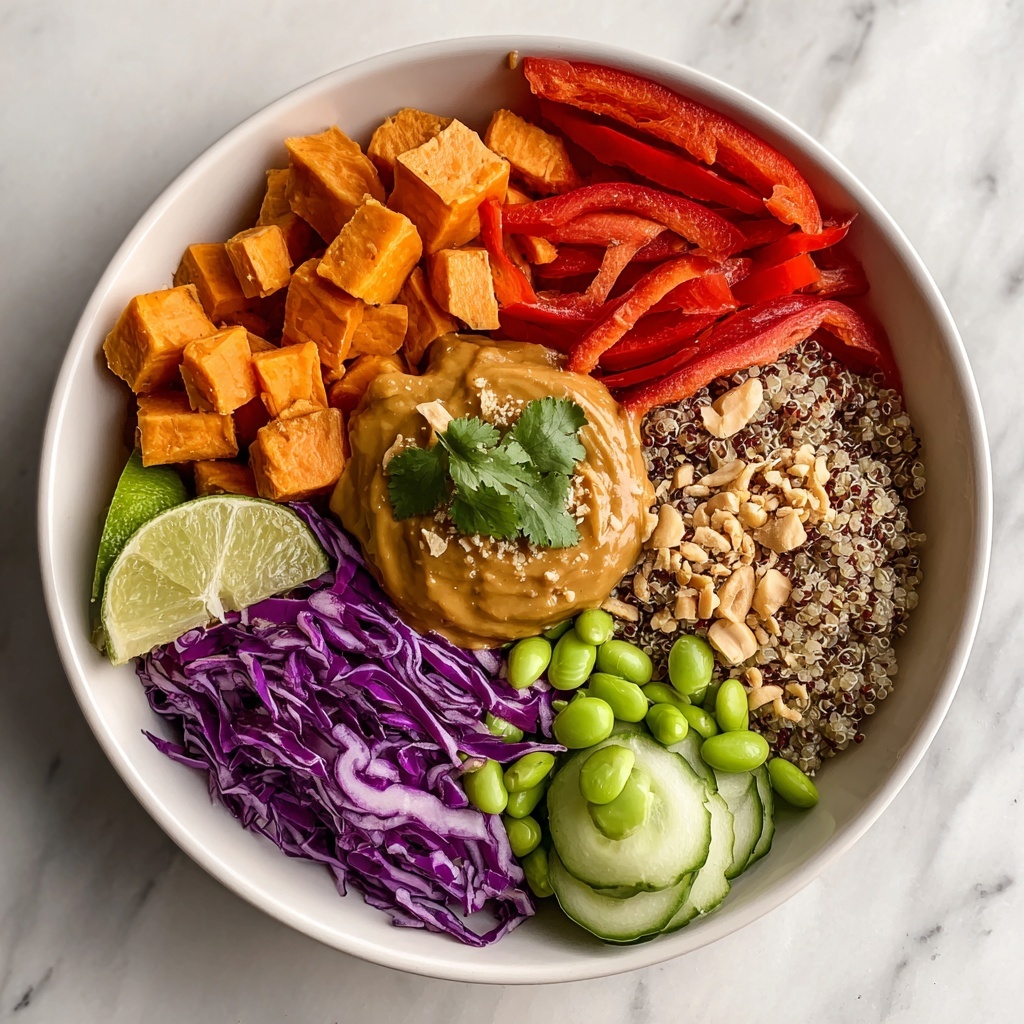
The beauty of the Thai Peanut Sweet Potato Buddha Bowl Recipe is in its simplicity—each ingredient plays a vital role in balancing flavors, textures, and colors. From the natural sweetness of roasted sweet potatoes to the crunch of fresh veggies and the rich creaminess of the peanut sauce, every element adds something essential to the mix.
- 2 medium sweet potatoes, peeled and cubed: These provide a sweet, hearty base with lovely caramelized edges when roasted.
- 1 tbsp olive oil: Helps roast the sweet potatoes to perfection and lightly sauté veggies.
- Salt and pepper, to taste: Basic seasoning to enhance every component’s natural flavors.
- 1 cup quinoa, rinsed: The fluffy, protein-rich grain that serves as the nutritious foundation.
- 2 cups water: For cooking the quinoa tenderly without losing its light texture.
- 1 cup shelled edamame: Adds a satisfying bite and protein boost.
- 1 red bell pepper, sliced: Brings freshness and a gentle sweetness to the bowl.
- 1 cucumber, sliced: Adds cool crispness contrast to roasted and sautéed elements.
- 1 cup shredded purple cabbage: Offers a slight crunch and vibrant color pop.
- 1 tbsp olive oil (for sautéing): To gently cook edamame and bell pepper without overpowering them.
- 1/4 cup roasted peanuts, roughly chopped: Provides crunch and more peanut flavor while garnishing.
- Fresh cilantro leaves, for garnish: Bright herbal notes that uplift the entire bowl.
- Lime wedges, for serving: A zesty finish when squeezed over to brighten every bite.
- For the Thai Peanut Sauce:
- 1/4 cup creamy peanut butter: The star ingredient that makes the sauce irresistibly creamy and nutty.
- 2 tbsp soy sauce: Adds saltiness and depth of umami flavor.
- 1 tbsp honey or maple syrup: Balances the sauce with a touch of natural sweetness.
- 1 tbsp rice vinegar: Brings acidity to brighten and balance richness.
- 1 tsp grated fresh ginger: Adds a warm, slightly spicy kick.
- 1 clove garlic, minced: Infuses the sauce with savory punch.
- 2 – 3 tbsp warm water, to thin sauce: Adjusts the sauce to the perfect pourable consistency.
How to Make Thai Peanut Sweet Potato Buddha Bowl Recipe
Step 1: Roast the Sweet Potatoes
Start by preheating your oven to 400°F (200°C) and lining a baking sheet with parchment paper. Toss the cubed sweet potatoes in olive oil, salt, and pepper to coat evenly, then spread them out on the baking sheet. Roast for 25 to 30 minutes, stirring halfway through, until they turn tender with golden, slightly crispy edges. These roasted sweet potatoes bring a wonderful caramelized sweetness and soft texture you’ll love.
Step 2: Cook the Quinoa
While the sweet potatoes are roasting, prepare the quinoa. Combine rinsed quinoa and water in a medium saucepan and bring to a boil. Then cover the pot and reduce the heat to low, letting it simmer for about 15 minutes until the quinoa is fluffy and all the water has been absorbed. Fluffy quinoa provides a light, nutty foundation that blends beautifully with the other ingredients in this Thai Peanut Sweet Potato Buddha Bowl Recipe.
Step 3: Make the Thai Peanut Sauce
In a small bowl, whisk together creamy peanut butter, soy sauce, honey or maple syrup, rice vinegar, grated ginger, and minced garlic. Gradually add warm water, stirring until you reach the perfect smooth and pourable sauce consistency. This sauce is the magic that brings a rich yet fresh flavor to the bowl, creating an irresistible umami and sweet balance.
Step 4: Sauté Edamame and Red Bell Pepper
Heat olive oil in a pan over medium heat, then toss in the shelled edamame and sliced red bell pepper. Sauté for about 5 minutes, allowing the veggies to soften slightly but remain crisp and vibrant. This step adds a tender but fresh bite that contrasts beautifully with the soft roasted potatoes and quinoa.
Step 5: Assemble the Buddha Bowl
Grab your bowl and create a base with the cooked quinoa. Layer on the roasted sweet potatoes, sautéed edamame, red bell pepper, cucumber slices, and shredded purple cabbage. Drizzle generously with your luscious Thai peanut sauce, making sure every corner gets a taste of that creamy goodness. This assembly turns it into a colorful, nourishing meal that’s as pleasing to the eyes as it is to the palate.
Step 6: Add the Finishing Touches
Sprinkle chopped roasted peanuts and fresh cilantro leaves over the top. Serve the bowl with lime wedges on the side for an extra zing of citrus that makes all the flavors pop. This final flourish elevates your Thai Peanut Sweet Potato Buddha Bowl Recipe to restaurant-worthy status while keeping it homemade and comforting.
How to Serve Thai Peanut Sweet Potato Buddha Bowl Recipe
Garnishes
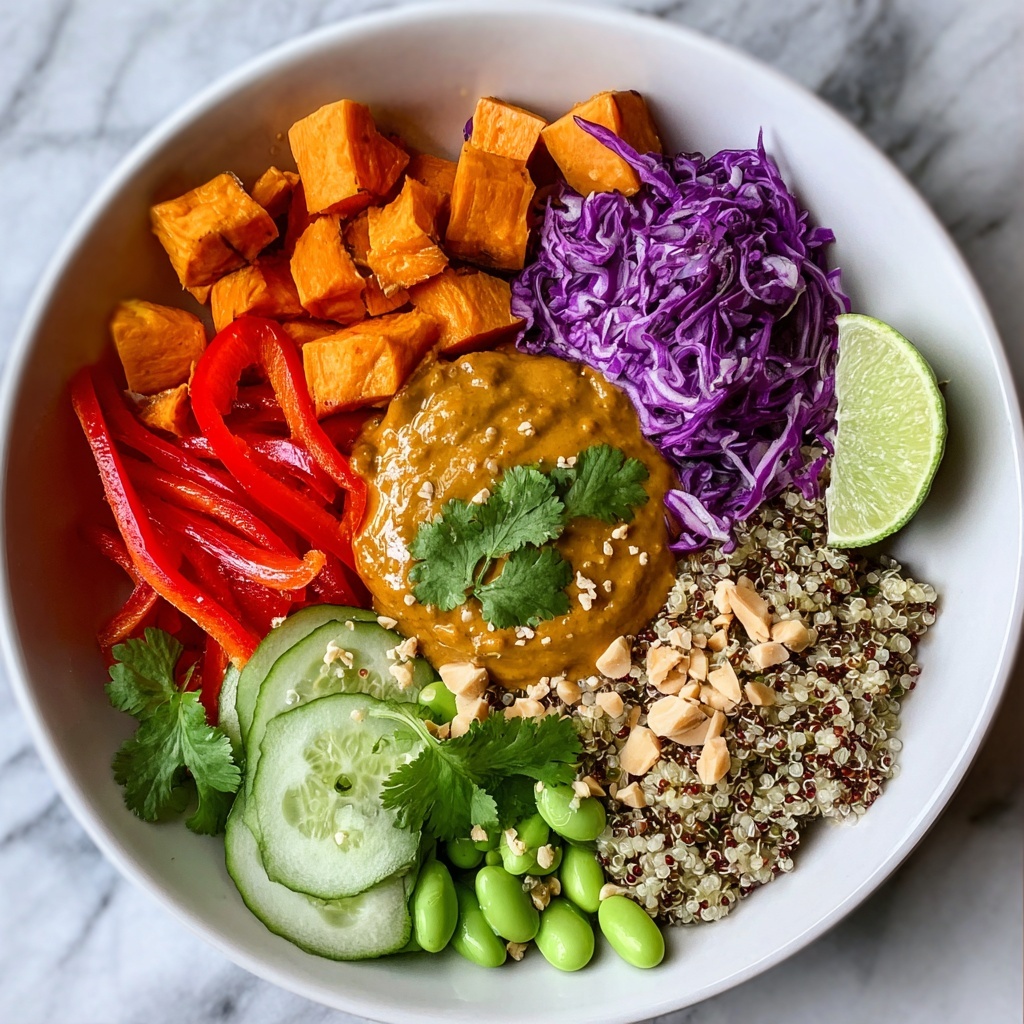
To really amp up the flavor and presentation, use chopped roasted peanuts for crunch and freshly chopped cilantro for a burst of herbal brightness. A generous squeeze of fresh lime juice right before eating adds refreshing acidity that balances the rich peanut sauce perfectly.
Side Dishes
This bowl shines on its own but pairs wonderfully with light, crisp sides like a simple cucumber salad tossed in rice vinegar or steamed jasmine rice for extra comfort. If you want to add protein, a side of grilled tofu or baked tempeh works beautifully alongside the vibrant flavors of this Thai Peanut Sweet Potato Buddha Bowl Recipe.
Creative Ways to Present
Present your bowl in a shallow wide dish so that each colorful ingredient is visible and inviting. For a fun twist, offer the peanut sauce on the side so everyone can customize their drizzle amount. You can also add toppings like pickled red onions or toasted sesame seeds to mix textures and create a striking visual appeal.
Make Ahead and Storage
Storing Leftovers
If you have leftovers (and I hope you do because this bowl is delicious!), store the components separately in airtight containers. Keep the quinoa, roasted sweet potatoes, sautéed veggies, and sauce chilled in the fridge for up to 3-4 days to maintain freshness and texture.
Freezing
The sweet potatoes and quinoa freeze well, so portion those out in freezer-safe containers for easy grab-and-go meals. However, fresh vegetables, peanut sauce, and garnishes are best added fresh to preserve their crispness and flavor.
Reheating
When ready to enjoy, gently reheat the quinoa and sweet potatoes either in a microwave or on the stovetop with a splash of water to avoid drying out. Add fresh veggies and drizzle on the Thai peanut sauce just before serving to keep all the vibrant textures intact.
FAQs
Can I substitute the quinoa with another grain?
Absolutely! Brown rice, bulgur, or couscous can work well as alternatives. Just make sure to adjust the cooking times accordingly. Quinoa’s light and fluffy texture complements this bowl beautifully, but don’t hesitate to use what you have on hand.
Is the Thai peanut sauce spicy?
This recipe’s sauce leans more towards creamy, sweet, and tangy, with warm notes from ginger and garlic but no heat. Feel free to add a dash of sriracha or red pepper flakes if you want to bring some spice into the mix.
Can I make this recipe vegan?
Yes! The recipe is naturally vegan as long as you use maple syrup instead of honey for the Thai peanut sauce. It’s a fantastic plant-based meal that doesn’t compromise on flavor or satisfaction.
What’s the best way to peel sweet potatoes easily?
Using a sharp vegetable peeler makes quick work of sweet potatoes. If they’re stubborn, try microwaving them for 30 seconds to loosen the skin, then peel away easily with your peeler or knife.
How can I store the Thai peanut sauce leftover?
Keep the sauce in an airtight container in the refrigerator for up to 1 week. Give it a good stir before using since it may thicken when chilled. You can thin it out with a little warm water if needed.
Final Thoughts
I can’t recommend the Thai Peanut Sweet Potato Buddha Bowl Recipe enough — it’s one of those feel-good meals that makes you excited to eat healthy without ever feeling like you’re missing out on flavor or texture. Each bite is a joyful blend of savory, sweet, and fresh with plenty of crunch and creaminess. So don’t wait; gather your ingredients, get roasting, and dive into this bowl of pure deliciousness. You’ll be so glad you did!
Print
Thai Peanut Sweet Potato Buddha Bowl Recipe
- Prep Time: 0h 20m
- Cook Time: 0h 40m
- Total Time: 1h 00m
- Yield: 4 servings
- Category: Main Course
- Method: Baking
- Cuisine: Thai
- Diet: Vegetarian
Description
This vibrant Thai Peanut Sweet Potato Buddha Bowl combines roasted sweet potatoes, fluffy quinoa, sautéed edamame and bell peppers, fresh cucumber and cabbage, all drizzled with a creamy, tangy Thai peanut sauce. Garnished with roasted peanuts, fresh cilantro, and lime wedges, this wholesome and colorful bowl is packed with nutrients and bold flavors perfect for a healthy, satisfying meal.
Ingredients
Roasted Sweet Potatoes
- 2 medium sweet potatoes, peeled and cubed
- 1 tbsp olive oil
- Salt and pepper, to taste
Quinoa
- 1 cup quinoa, rinsed
- 2 cups water
Sautéed Vegetables
- 1 cup shelled edamame
- 1 red bell pepper, sliced
- 1 tbsp olive oil (for sautéing)
Fresh Vegetables
- 1 cucumber, sliced
- 1 cup shredded purple cabbage
Thai Peanut Sauce
- 1/4 cup creamy peanut butter
- 2 tbsp soy sauce
- 1 tbsp honey or maple syrup
- 1 tbsp rice vinegar
- 1 tsp grated fresh ginger
- 1 clove garlic, minced
- 2–3 tbsp warm water (to thin sauce)
Garnish & Serving
- 1/4 cup roasted peanuts, roughly chopped
- Fresh cilantro leaves, for garnish
- Lime wedges, for serving
Instructions
- Preheat Oven: Preheat your oven to 400°F (200°C). Line a baking sheet with parchment paper to prevent sticking and for easy cleanup.
- Roast Sweet Potatoes: Toss the cubed sweet potatoes with 1 tbsp olive oil, salt, and pepper until evenly coated. Spread them in a single layer on the prepared baking sheet. Roast in the oven for 25-30 minutes, stirring halfway through, until tender and slightly crispy.
- Cook Quinoa: While the sweet potatoes roast, combine rinsed quinoa and water in a medium saucepan. Bring to a boil over medium-high heat, then reduce to low. Cover and simmer for about 15 minutes until all water is absorbed and quinoa is fluffy. Remove from heat and set aside.
- Prepare Thai Peanut Sauce: In a small bowl, whisk together creamy peanut butter, soy sauce, honey or maple syrup, rice vinegar, grated ginger, and minced garlic. Gradually add warm water, whisking continuously until you reach your desired sauce consistency.
- Sauté Vegetables: Heat 1 tbsp olive oil in a pan over medium heat. Add shelled edamame and sliced red bell pepper. Sauté for about 5 minutes until vegetables are slightly tender yet retain some crispness.
- Assemble Buddha Bowls: In individual bowls, start with a base of cooked quinoa. Top with roasted sweet potatoes, sautéed edamame and red bell pepper, fresh cucumber slices, and shredded purple cabbage. Drizzle generously with Thai peanut sauce.
- Garnish and Serve: Sprinkle chopped roasted peanuts and fresh cilantro leaves on top. Serve each bowl with lime wedges on the side for an extra burst of fresh flavor.
Notes
- For a vegan version, use maple syrup instead of honey in the sauce.
- You can prepare quinoa and roasted sweet potatoes ahead of time and store in the refrigerator for quick assembly later.
- Adjust the thickness of the peanut sauce by varying the amount of warm water to suit your preference.
- Feel free to swap edamame with chickpeas or tofu for additional protein options.
- Add chili flakes or sriracha to the peanut sauce if you prefer a spicier flavor.